Field notes from the partners building growth systems for the world’s largest companies.
Essays, frameworks and provocations on innovation strategy, accounting, culture and leadership — written by Dan Toma, Cris Beswick and the OUTCOME team. New pieces most weeks.


Escaping “Proof Of Concept” Purgatory: The Two Fixes Your Process Needs
AI projects often get stuck in the POC stage. Discover two changes to your innovation process that help move AI from experimentation to production.

A Better Way to Measure AI Adoption: 10 Metrics That Actually Matter
Most AI adoption dashboards measure activity: how many employees use AI, how many prompts they generate, or how many have access to the tools. But these numbers tell us little about whether work is getting better. We outline 10 practical metrics to help leaders move beyond vanity metrics and connect AI usage to workflow improvements, business performance and economic value.

The 3 Types of Innovation Are Not What You Think They Are (But They Do Determine Your Success)
The Official Story “Innovation” is not peanut butter. You can’t smear it all over everything and expect deliciousness. When discussing innovation, you must be specific so people know what you expect. This is why so many thought leaders, consultants, and practitioners preach the importance of defining different types of innovation. It’s easy to get

You Can’t Regulate Your Way to AI Sovereignty
Europe’s AI Act was mocked for preferring rules over innovation. Now, as US political whims disrupt giants like Anthropic, legal stability looks like a superpower. Austria wants to lure top AI labs to the EU, but can regulation alone replace American compute?

Europe’s defense industry may be facing a Kodak moment
Europe’s defense industry may be facing a Kodak moment. The issue isn’t whether low-cost drones are better than tanks, artillery, or missiles. It’s whether they are changing the economics of warfare. As the cost of attack falls dramatically, Europe risks continuing to optimize for increasingly sophisticated systems while missing a fundamental shift in what “military value” means.

Who Gets Blamed When You Kill the Pilot?
Stopping work that isn’t paying off sounds obvious, but organizations struggle to do it. Projects become “zombies,” consuming budget and attention because stopping them feels like admitting failure. The solution isn’t more courage—it’s structure: agree the criteria for stopping before the work begins and assign clear ownership. In the age of AI, knowing when and how to stop is becoming as important as knowing what to fund.

Is the ‘SaaSpocalypse’ a myth? The real cost of AI-built software
AI has made software dramatically cheaper to build. But that does not mean software has become cheaper to own. As companies consider replacing SaaS subscriptions with AI-built internal tools, the real question is not whether they can build them, but whether they are prepared to maintain, secure, evolve and ultimately own them. The SaaSpocalypse may be less about the death of SaaS—and more about companies discovering the hidden cost of running their own software.

Want to Sound Smart? Stop Saying ‘Innovation.’
“Innovation” has become one of the most overused words in business. We say innovation is a priority, that it drives growth, that we need a culture of innovation—but rarely explain what we actually mean. The better approach is to replace vague language with concrete outcomes: new revenue streams, new products, new customers, higher margins, new business models. The point isn’t to stop using the word innovation altogether. It’s to stop using it as a substitute for saying what we actually want to achieve.

AI Is Putting a Price Tag on Bureaucracy
AI is changing how companies measure innovation, growth, strategy and governance. As AI reduces the cost of building, Cost of Failure becomes a more powerful Innovation Accounting KPI for measuring how efficiently organizations learn, make decisions and allocate resources. The article explores how Cost of Failure can help leaders put a financial value on slow decision-making and inefficient governance—and rethink how they measure innovation and growth in the AI age.

Changing the Ending
Most AI governance discussions focus on ethics, regulation, or technology. The more immediate challenge is organizational: ensuring that the decisions determining whether AI creates value remain owned by people with the authority to make them. This article presents four structural changes that restore accountability before AI’s speed turns governance into an afterthought.

Germany’s Innovation Paradox
In 1990, a group of brilliant engineers set out to build the future. They envisioned mobile and cloud computing, digital assistants, connected devices, mobile commerce, and software ecosystems. Their company was called General Magic. General Magic did not lack talent, vision, funding, or prestigious backers. It failed because the ecosystem and infrastructure were not ready,

We’ve Seen This Movie Before
The Chief AI Officer is about to relive the Chief Innovation Officer’s hardest decade, in fast-forward. If you lived the first one, you can already see the second one coming. Someone decided the innovation team, or you specifically, should own or maybe even co-own the AI agenda, and the pilots, the pressure, and the board’s

Why You Shouldn’t Have An Innovation Portfolio (according to HBR)
You are a savvy manager, so you know that you need an innovation portfolio because (1) a single innovation isn’t enough to generate the magnitude of growth your company needs, and (2) it is the best way to manage inherently risky endeavors and achieve desired returns. Too bad you’re wrong. According to an article in

The Problem with Stage Gates Isn’t the Gates
What makes stage-gate governance so frustrating in many organizations is that it unintentionally trains teams to behave in exactly the opposite way innovation requires. Instead of creating transparency, it creates presentation theater. Instead of encouraging fast learning, it encourages delayed escalation of problems. And instead of helping leadership stay closely connected to innovation efforts, it

What Bespoke Tailoring and Vibe-Coding Have in Common
And why vibe-coding enterprise hackathons (aka challenges) may be the best thing your organization can do for its employees right now. Before I could read or write, I could make clothes. For my doll, admittedly, but still. I grew up with a deep love for bespoke tailoring, the discipline of designing one unique piece for

The Evolution of Go-to-Market: Building a Commercial Learning System
Over the last two decades, companies have become better at managing technical uncertainty. Across industries, product development has shifted toward iterative methodologies like Lean Startup, agile development, and design thinking. Companies are no longer strangers to prototypes, MVPs, and pilots. The underlying logic is simple: if something is uncertain, test it early and continuously before

Why Traditional Performance Management Kills Innovation
Research reveals a troubling reality that most HR departments refuse to acknowledge: employees consistently report that their performance review process negatively shapes their view of HR and adds little value to actual performance improvement. Yet organisations continue investing millions in annual performance management systems that do precisely what they were designed to do—optimise for predictability,

Who Should Own the AI Budget—and Why This Is a Terrible Question
Artificial intelligence has quickly moved from being an experimental technology to becoming one of the largest budget priorities in most organizations. In many companies today, a significant portion of discretionary spending is being redirected toward AI initiatives, pilots, tools, talent, and infrastructure. As usually happens in corporate environments, budget allocation is never just about money—it

Why AI Projects Fail: 6 Mistakes That Kill ROI (and How to Fix Them)
Most AI projects don’t fail because of the technology—they fail because of how they’re implemented. Despite massive investment, up to 90% of AI initiatives never deliver real ROI. This article breaks down the most common mistakes organizations make—and how to avoid them.

AI Should Reshape the CEO Role—But Not in the Way You Think
Data used to live in the warehouse. Then it moved into dashboards. Now it’s creeping into the boardroom. Are we entering the era of the “Algorithmic CEO”? Should CEOs fear for their jobs? Or will they be the “human in the loop” when it comes to decision-making? It’s not a robot replacing leadership — but

You Can’t Delegate AI Transformation
BCG published a report in September 2025, according to which leaders who personally experiment with AI tools, achieve outcomes up to 12 times better than those who delegate exploration to their teams. 12 times! The technology is the same across organizations, but the difference consists of how leaders interpret, guide, and integrate it into the

Lessons from Porsche: Why Strategy Must Be Built to Learn, Not Just to Declare
Disruption is rarely about technology itself. What truly disrupts companies is the speed at which markets, customer expectations, and competitive dynamics change—and whether an organization can adapt at the same pace. As the saying goes, “if the speed on the outside is greater than the speed on the inside, the end is near.” Porsche’s recent struggles illustrate this clearly. The challenge was not electrification as a concept, but over-committing to a strategic path before customer desirability was fully validated. By the time real feedback emerged, capital had already been locked in, limiting strategic flexibility. In an environment defined by constant change, strategy can no longer be a static declaration. It must be treated as a series of testable assumptions—designed to learn quickly, adapt continuously, and align innovation with real customer demand.

From Vision to Value: Why Innovation Strategy Must Be More Than a Strategic Pillar
In many organisations, innovation gets declared a strategic priority yet still fails to deliver real value because leaders can’t explain how innovation tangibly advances core business goals. Despite widespread agreement that innovation is essential, executives often lack strategic clarity on linking innovation efforts to outcomes like competitive advantage, growth, or operational performance.

Severance Packages & Education in the Age of AI
AI is automating jobs faster than we can replace them. Entrepreneurship is the only safety-net. The AI era will divide economies into two types of workers: those waiting for jobs to be created for them, and those capable of creating value on their own. Entrepreneurial education determines which side we end up on.

Who Knew That Eurovision & Måneskin Could Teach Us Something About Innovation Management
Innovation may be the engine of organizational growth, but too many companies struggle to move great ideas from excitement to execution. Traditional, jury-led innovation challenges often surface promising solutions—yet those solutions can stall when employees don’t feel connected to the outcome. Enter a fresh twist: Eurovision-style voting. By blending expert review with company-wide participation, organizations can spark genuine engagement, build early buy-in, and dramatically increase the chances that new ideas become adopted innovations. This article explores how micro-innovation challenges and hybrid voting systems can close the innovation gap, strengthen culture, and turn employees into co-creators of transformation.

Three Reasons to keep Investing in Ideas not Aligned with Strategy
Smart leaders know that strategy and innovation must align—but sometimes growth demands exceptions. Learn when to invest beyond the plan.

How to Introduce Innovation Accounting Without Alienating Your Organization
Learn how to introduce innovation accounting step by step, reduce resistance, and measure innovation ROI with actionable metrics for sustainable growth.

Making Metered Funding Work in a World of Annual Budgets
Startups thrive on metered funding—capital released in stages, tied to evidence, not the calendar. Corporations, by contrast, remain bound to annual budgeting cycles that can stall even the most promising ideas. Unless companies reimagine how funding and innovation intersect, they risk losing not just speed, but the very market opportunities innovation is meant to capture.

The Innovation Engine: Why Middle Managers Are Crucial for Transformation Success
The key to sustainable change lies not at the top or bottom, but in the middle. Middle managers—often dismissed as the ‘frozen middle’—are actually positioned to be powerful innovation accelerators when properly enabled

The M&A Checklist for Sustainable Growth
In an era where growth is harder to come by and disruption is the norm, boards face a critical question: where should capital and leadership focus go next? This article outlines the three strategic levers companies can pull—operational optimization, innovation-led growth, and M&A—and offers a clear, actionable checklist to increase the odds of success in any acquisition. For executives serious about sustainable, value-creating growth, this is a blueprint for making smarter, strategy-aligned decisions.
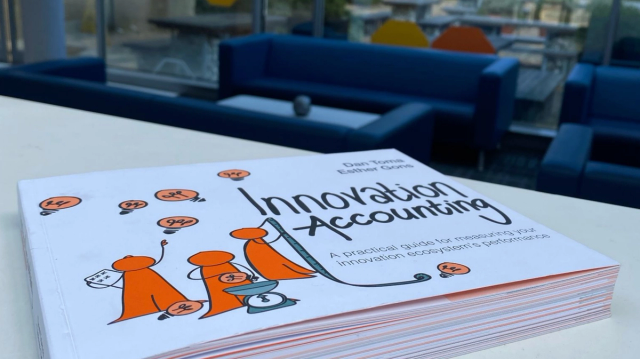
The Minimum Viable Innovation Accounting System
For years, executives have cited one consistent barrier to investing in innovation: the inability to measure it. Without clear metrics, innovation is often relegated to the sidelines—seen as a discretionary activity rather than a disciplined driver of growth. The consequences are real: careers in innovation become cul-de-sacs, and companies underinvest in what should be a

Beyond Innovation Theater: Building a True Culture For Innovation
Despite executives recognizing innovation as a top growth driver, 94% say their companies’ innovation performance falls short. Often the problem centers on culture—an abstract concept relegated behind tangible, process‑oriented goals.

Growing out of a crisis: five strategy lessons from Garmin
When disruption hit, Garmin didn’t try to outmuscle its competitors—it outlearned them. By turning R&D into a tool for exploration rather than just execution, Garmin used innovation to test new markets, understand shifting customer behaviors, and validate its next growth curve. Its pivot to wearables wasn’t a gamble; it was a strategic evolution rooted in experimentation, learning, and focus.
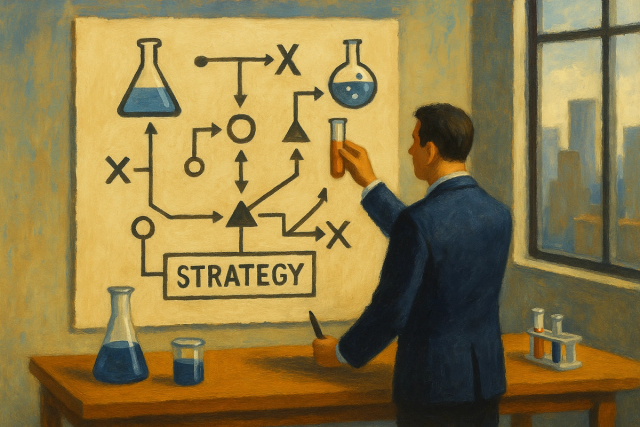
Building Strategy as a Series of Experiments
Forward-thinking companies are replacing rigid roadmaps with continuous experimentation—treating strategy not as a fixed plan, but as a series of testable hypotheses. This shift enables faster learning, smarter decisions, and tighter alignment between innovation and strategy—essential for thriving in uncertainty.
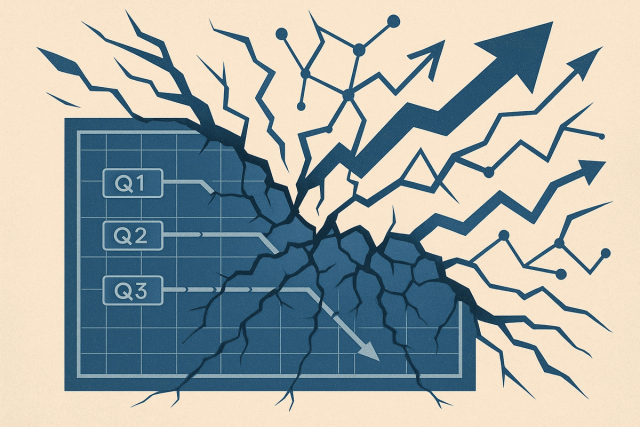
What Is The Role Of Strategy?
It took the telephone 75 years to reach 1 million users. Television did it in about 13 years. Netflix reached the same milestone in just 3.5 years—and ChatGPT did it in only 5 days. We are living in a world where the pace of change and the speed at which information spreads are accelerating exponentially.

Why Disruptive Innovation Is A Bad Business Idea. And What Can You Do Instead
Selling a company on the need for disruptive or transformative innovation has always been a challenge. Some businesses simply don’t need it, others can’t afford it, and most struggle to justify investing in something inherently high-risk. The instinct to protect the core business—its efficiencies, margins, and financial predictability—often overrides the desire to explore bold new

Why Leadership Teams Fail to Drive Innovation: The Cultural Challenge
In today’s rapidly evolving business landscape, a leadership team’s ability to foster innovation often determines an organisation’s success or failure. Yet, the stark reality is that many senior teams urgently need help creating the cultural conditions necessary for innovation to flourish. Based on extensive work worldwide with CEOs and senior executives, my experience reinforces that

Leadership’s Critical Role in Shaping Culture For Innovation
While many companies proudly display values like “Innovation” and “Excellence” on their walls, few successfully translate these aspirational concepts into meaningful cultural change. The key to building an influential innovation-led culture lies not in proclamations but in embedding behaviours that support creative problem-solving and breakthrough thinking throughout the organisation. Leadership’s Critical Role When leaders claim

Building the Right Innovation Portfolio
The 70-20-10 portfolio distribution rule isn’t universal. While popularized by companies like Google, the 70-20-10 innovation model is not a one-size-fits-all approach. Companies need to customize their innovation portfolios based on unique factors like market conditions, financial health, competitive landscape and strategic goals rather than adopting this model outright.

What It Takes to Make ESG Happen in Your Company
Organizations committed to serious ESG investments and profitability should focus on fostering innovation capabilities rather than establishing a distinct ESG function.

Ways of Mapping Your Innovation Portfolio
Innovation-led growth, at its core, hinges on how resources are allocated; it’s not simply a matter of creativity or generating new ideas. The challenge lies in prioritizing a portfolio of initiatives in a way that aligns with a company’s strategic goals and prepares it for the future. Often, companies fall into the trap of using

The Quest for Innovation Maturity: How AIM is Revolutionising Corporate Innovation
Innovation is not just a buzzword, it’s a necessity for organisational success in today’s rapidly evolving business landscape. However, accurately assessing and improving innovation capabilities is a challenge faced by many companies worldwide. This global need led to the development of the Assessment for Innovation Maturity (AIM), a powerful tool designed to measure and enhance corporate innovation

Having Goals Doesn’t Mean You Have a Strategy
Sadly, in many board conversations, the terms “goals” and “strategy” are often thought of as interchangeable probably due to the fact that one can’t exist without the other, yet they represent fundamentally different concepts. If goals are the desired outcomes or targets a company aims to achieve, strategy refers to the plan or approach the

What the latest BCG report tells us about what leaders need to do to build innovation capability
Innovation has never been a higher priority for companies, yet most struggle to deliver on their aspirations. BCG’s 2024 global innovation survey found that 83% of companies rank innovation as a top-3 priority. However, innovation readiness has plummeted, with just 3% of companies scoring in the “ready zone” on BCG’s innovation maturity benchmark, down from 20% in

How to Reboot Your Innovation System
Having written several books over the past decade and contributed small snippets of thought leadership or entire chapters to over a dozen other books, I still return to the book I wrote with Derek Bishop and Jo Geraghty of Culture Consultancy fame. Despite the world of corporate innovation seemingly moving on from when we wrote

Fostering the Right Culture FOR Innovation – The Vital Role of Psychological Safety in Leadership
Innovation has become one of the cornerstones of success because leaders know that failing to adapt and embrace new ideas risks their organisations being left behind by more agile competitors. However, innovation doesn’t happen in a vacuum – it requires an environment where employees feel empowered to take risks, challenge assumptions, and contribute their unique
The Decline of Corporate Innovation Arms: Why It Makes Sense and How to Reconnect Innovation with Strategy
In recent years, numerous companies have made the decision to close their innovation arms. Notable examples from this year alone include Migros, ZF, SAP, FWD, and Walmart. At first glance, this trend might seem counterintuitive. After all, innovation is often touted as a crucial driver of growth and competitive advantage. However, a new study by Boston Consulting Group

Innovation-led Transformation: Unleashing the Power of Middle Managers
Innovation-led Transformation: Unleashing the Power of Middle Managers Transformational initiatives have become a ubiquitous pursuit across the corporate landscape, with a third of significant organisations continuously undertaking some form of large-scale change program. However, the vast majority ultimately fail to deliver lasting impact despite the fanfare and resources dedicated to these efforts. Instilling an authentic

Cultivating a Thriving Culture for Innovation: A Practical Leadership Approach
Innovation has often been treated as a cyclical phenomenon, eagerly embraced during prosperous times and relegated to the sidelines during economic downturns. However, in today’s globalised business landscape, where geographic boundaries and market barriers are rapidly disintegrating, a company’s innovation ability has become a constant imperative rather than a passing trend. The capacity to tap

When Building a Culture For Innovation, Form Follows Function
First, let’s unpack a Culture OF Innovation vs A Culture FOR Innovation. Innovation is not a monolithic entity that can be injected into an organisation’s cultural fabric. Instead, it emerges as the synergistic product of elements intentionally combined within a nurturing environment. With this understanding, we can delineate two distinct cultural paradigms regarding innovation: The

Overcoming the Innovation Paradox: Three key reasons why Large Organisations Struggle to Stay Ahead
In the modern business world, where disruption is the norm and change is relentless, the ability to continuously drive innovation-led growth has become the ultimate competitive advantage. Yet, for many large, established organisations, the pursuit of building innovation capability and embedding it into organisational culture remains an elusive and often frustrating endeavour. Despite pouring significant

Innovation Accounting is for Everyone
Innovation accounting can be used by any company regardless of how professional they are with innovation management now. The only things that changes are the metrics and the use of the insights the metrics provide.
The core principles of Leading FOR Innovation
It’s no secret that in today’s dynamic business landscape, for some, innovation is still just a buzzword – but for others, it’s the lifeblood of their organisation and an antidote to remaining relevant. At the helm of this radical evolution stand leaders who are pioneers, visionaries, and, most importantly, adept at catalysing novel ideas into

Cost of Failure vs. Rate of Failure
SUMMARY Deciding to focus on the cost of failure instead of the rate of failure will have many positive consequences in your company innovation system Tracking the cost of failure will encourage a mindset gravitating around (cost effective) experimenting and prototyping while, an emphasis on rate of failure will prompt leaders to do the impossible

Why ISO Standards Fall Short in Innovation Management
There are companies nowadays that are recognizing the importance of innovation for their long-term strategic intent. Some of these companies have had great experiences with innovation in the past and just want to double down on the effort and professionalize the practice; while others want to do it, prompted by the success competitors had with

Leadership Tips for Building a Culture For Innovation
In today’s business landscape, characterised by rapid technological change, evolving customer expectations, and non-traditional competitors, building the organisation-wide capability to innovate continuously is more vital than ever. With many companies launching one-off initiatives, products, and propositions, it’s become a marketing department’s dream to profess that the company is now innovative. The challenge is that our

The Art of Corporate Spin-Outs: When to spin-out? How to spin-out?
In the volatile economic environment of today, if done right, innovation isn’t just a buzzword; it’s the lifeline of the company. Corporations are constantly seeking ingenious ways to breathe life into groundbreaking ideas, and spin-outs are just one of many ways in which companies can make innovation a viable proposition. “Spin outs” typically refer to
The Three Things Open Innovation Needs to Work
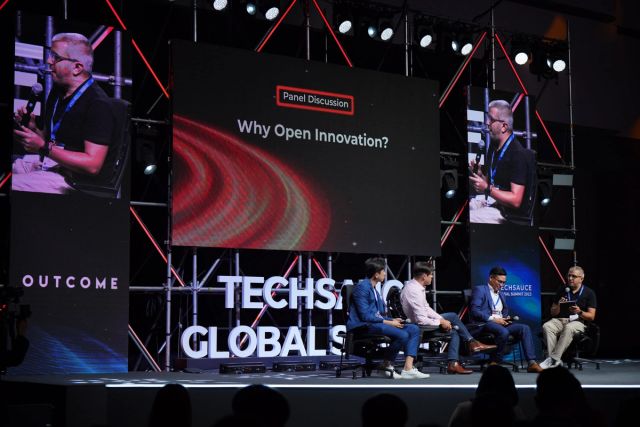
Outcome partnered with TechSauce for the 2023 global summit. Part of this partnership Outcome helped curate the corporate innovation track at this year’s event. Hence about two months ago I had the pleasure to host a panel discussion on the topic of open innovation in Bangkok. Given the prestige of the TechSauce stage, my panelists’ profiles were

If You Want To Innovate, Learn To Say “No”
Pundits tell us that the world is increasingly volatile, uncertain, complex and ambiguous. It’s the VUCA gospel. Under the banner of “innovate or die,” massive transformation projects are being kicked off constantly. Executives around the world scramble to reorganize and reinvent their organizations, only to reorganize and reinvent them again. It gets worse, consider a

Rallying organisations around forward-thinking innovation strategies
Outcome talks to Aleksandra Petkov-Georgieva from Raiffeisen Bank International about the challenges of building innovation capability and culture in large complex organisations, why chasing the radical isn’t always the best strategy and why organisational alignment is critical for driving meaningful change through innovation. Outcome: Many companies tend to discount more ‘adjacent’ innovation activity, i.e., activity more

Thesis-based Investment or Theme-based Investment
One of the worst mistakes companies make when pursuing innovation-led growth is to sink their money into various investments without knowing why, beyond just ‘it’s a cool technology that can disrupt us’ or ‘it’s the board’s pet project’. Yes, this sounds like the world’s most obvious mistake to avoid, but in our experience, we’ve seen

The Critical Role of Culture for Innovation
Organisational culture plays an essential role in fostering successful innovation, yet it is often overlooked or discounted by those responsible for driving that growth, i.e. the executive team. But to drive tangible change and propel a business forward, there needs to be a conscious effort put into curating the leadership style of each internal group

The Innovation Thesis and its Structure
President Kennedy’s address to the joint session of the US Congress on May 25th 1961 can be viewed as the start of the space race: “… I believe that this nation should commit itself to achieving the goal, before this decade is out, of landing a man on the moon and returning him safely to

Attention all Leaders – You Need to Create Psychological Safety if You Want Your People to Innovate
As a leader, you need your people to perform at their best if innovation is going to happen. But as essential players in that process, people need psychological safety, i.e. when they feel they can comfortably express ideas and opinions without fear of repercussions or judgement. If you want your organisation to be able to

Why the Core Skill for Leading For Innovation is Empathy
As a leader in an organisation that wants to drive innovation, it is crucial to have the ability to understand and relate to your people. Empathy is essential for creating effective cultures that allow organisations to thrive in increasingly competitive environments. Allowing leaders to develop empathy-based relationships can make all the difference towards creativity, innovation,

Setting Goals for Innovation
Setting goals for the innovation investment is critical if your company treats innovation as a business imperative activity and not just a nice to have that happens on the sideline. This said, setting goals for innovation becomes even more critical in times when resources are scarce and the company needs to reshuffle its priorities. Experience

Moonshots are Nice, but do you Have a Space Program? Building an Innovation System.
We believe that any company in the world can launch a moonshot providing that the project is sufficiently supported by the leadership of the company. But few companies have an innovation system able to constantly launch new innovations in the market.

Does Your Company Actually Need Innovation Accounting?
Many companies complain about the lack of innovation metrics but in many cases the lack of innovation accounting is not the most important thing the company needs to focus its efforts on.

Why Mutual Obligation is the key to Leading FOR Innovation
When I talk about leadership in the context of innovation, I’m always particular about using the phrase ‘leading FOR innovation’ not ‘innovation leadership’ because building a culture for innovation isn’t about leaders becoming innovators; it’s about leaders building a system and environment where innovation can thrive. In ‘Innovation is a Team Sport’, I unpacked my

Three Things Your Company Needs to Have in Place to Implement Innovation Accounting
You ability to measure innovation is tightly connected to the maturity of your company’s innovation system. There are certain things you have to have in place to be able to implement and benefit from innovation accounting.

Innovation is a Team Sport
At OUTCOME, we believe innovation is a system game, meaning it’s a team sport. The challenge is that many organisations have lost sight of the true definition of a team. As defined by Professor Leigh Thompson of the Kellogg School of Management, “a team is a group of people who are interdependent with respect to

Want to innovate? Start with a business case
Asking intrapreneurs for a business case or a financial forecast early on is useless. Or at least this is what the innovation community has been trying to convince corporate leaders for the past years. Countless articles were written on the topic and an endless flow of social media posts went out to convince leaders that

How Audi and others can avoid their Kodak moment
In one of our recent articles, ‘Can Audi avoid its Kodak moment?’, we discussed the implications for Hildegard Wortmann’s view that there is only a 50% chance that Audi will still exist in 10 years. We proposed that her view as an Audi AG member of the board of management responsible for Sales & Marketing

Three Organizational Designs for Innovation
The design/structure of an organization can help or hinder its progress toward its goals. Independent of size and industry, organizations can achieve their goals by properly matching their needs with the structure they use to operate. Here are three ways in which innovation can be organized.

Why is a Career in Innovation Management a Bad Idea. And What Can You do About it.
In most companies that don’t have an embedded system for innovation or don’t take innovation management seriously, following a career in innovation management is advisable if you want to make it to top management later in life. But there are still things one can do.

HR, from corporate police to champions of LOVE
For more than a decade now, the fundamental challenge around driving real growth and value from innovation is tied to many companies low focus on organisational design and culture. The design of an organisation and more importantly, how its people contribute, places HR at the centre of the challenge. Sometimes historically referred to as the

Can Audi avoid its Kodak moment?
Recently Hildegard Wortmann, Audi AGs member of the board of management responsible for Sales & Marketing, said that there is only a 50% chance that Audi will still exist in 10 years. As alarming as this might sound, her perspective is probably rooted in acknowledging that the company cannot adapt quickly to changing customer preferences.

Five Innovation Accounting Indicators that are Telling you if your Middle Managers are Stifling Innovation
It is a well established fact that middle management plays a crucial role in driving innovation. But in the absence of clear indicators for innovation performance it is difficult to say if middle management is actually driving innovation or stifling it.

Three Things to Consider When Developing an Innovation Strategy
The traditional approach to developing a business strategy that is carried to innovation strategy development is inconsistent and insufficient to tackle the challenges in the business environment of today, therefore leaders are already seeking alternatives.

The HB seat at your innovation table
Who sits at your innovation table? OK, I acknowledge that the answer may vary according to your business sector and size. Hopefully, at least some of the executive team are there, helping to set strategy and vision and sponsor innovation-led transformation. I’m sure you will have one or more innovation leaders or champions sitting in,

Managers drive innovation from the heart.
This is a piece about and for managers. They could be line managers, middle managers, or team leaders; in a way, the title is immaterial. But in any organisation, these individuals sit at its heart, interpreting the vision, delivering the strategy, and ensuring that the engine runs smoothly, and the business stays on track. You

Why Now? Why Us? A Radically Rational Guide for a Winning Business Strategy
Most corporate strategies, if they are developed well (and from our experience that’s a big IF), are great at giving a direction for a company’s efforts for the foreseeable future. In essence, they are great at explaining where the company is heading and what it wants to achieve. When Netflix made the transition towards streaming

Five ways to drive innovation from the centre
Innovation has the potential to thrive in every organisation, no matter how large or small. So why are 55% of businesses not seen as active in innovation? The answer may lie with your middle managers, says Cris Beswick, author and co-founder of OUTCOME. Here’s how you can create the right conditions to enable your people

The Three Things You Need to Set Goals For Your Innovation Investment
A lot has been invested in the name of innovation over the past years – even before the pandemic. The pandemic however, highlighted once more the importance of innovation and the importance of an established innovation system & culture able to constantly bring to life successful new business models. Companies that haven’t necessarily considered innovation

Why sustainability and innovation are completely intertwined
Dan was doing some research on LinkedIn and was surprised at how few people mention both innovation and sustainability in their profile headline. I think innovation and sustainability are completely intertwined – and are only going to become more so over the next few years. Incremental changes A company starts by asking what it can

The three dimensions of sustainability
What does it mean to be a sustainable business? Pre-covid, when I asked this question the majority of people jumped straight to environmental sustainability. For me, with a background in finance and innovation, financial sustainability has always been crucial – are you making enough money to cover your costs and remain viable? And there has

Stop Chasing Unicorns
Ever since the whole frenzy with corporate innovation started back in 2010 countless millions have been spent by corporations around the world on a variety of innovation-driving vehicles. Some companies were driven by the fear of disruption, others were driven by the pursuit of higher return multipliers. Regardless of the reason, a significant group of

Why now? The case for becoming a better business
Why does your business exist? 20 years ago most businesses would have said it was to make money for shareholders. Nowadays it’s harder to predict the response. Businesses create value for their stakeholders. And we’re increasingly recognising that businesses should consider a broader set of stakeholders than just shareholders – and so ‘value’ needs to

Why build a system for innovation
While the debate of innovation being art or science is still raging on we have to admit that not everyone in a large company is going to be a ‘Steve Jobs’. And nothing’s wrong with that. Also, independent of how much your HR department is struggling to attract the best innovation talent, the company will

What does it mean to be a ‘responsible business’?
What does ‘responsible business’ or ‘purposeful business’ mean to you? For some it might be about transitioning to a greener energy supply and recycling as much office waste as possible. For others is might be about deprioritising profit as a goal and focusing on achieving a social objective such as helping homeless people get back

The Startup Collaboration Maturity Assessment
Understanding the current maturity of a corporation’s startup collaboration process is the key to making further improvements.

If innovation was human…
If innovation was human, how would it feel? Would it be frustrated and angry at seeing its potential wasted? Would it be full of hope and joy at the positive changes it could deliver to people’s lives and livelihoods? Or would it be like the rest of us; working through a mix of emotions as

Strategy ahead of the technological curve
Most established organizations tend to be a bit more prudent when it comes to new technologies and integrating them in their strategic options, however totally ignoring these is not an option either. Technology developments influence our lives. They bring about disruption by enabling business models that weren’t previously possible. Business models which squeeze out the

What kind of VUCA leader are you?
Don’t panic! From Corporal Jones’ immortal catchphrase in Dad’s Army to being written on the front of the Hitchhiker’s Guide to the Galaxy, it’s funny how often that instruction ‘Don’t panic’ reoccurs in books and films. A simple phrase, yet one which is almost as meaningless as it is helpful. The same potential for panic

Leadership development is broken – so, how do we fix it?
Leadership development is broken! How does that statement make you feel? Do you see it as a personal attack and demand proof, or do you nod sadly and agree? And who do you blame; the system, leadership schools, your predecessors, your employer; or perhaps you accept some of the criticism yourself? Now whilst psychologists may

Leading FOR Innovation; It’s a numbers game!
Let me make you a promise; nowhere in this article am I going to ask you where you see your leadership style sitting on a scale of 1-10. Nor am I going to set out to tell you that what you are doing is wrong. After all, every organisation is different, and every organisation may

To drive innovation, you must understand your ecosystem
An innovation ecosystem’s many elements must work in sync for growth to happen, write Cris Beswick, Dan Toma and Ricardo Vargas In 1878 Leo Tolstoy released what would become one of his most acclaimed works, the novel ‘Anna Karenina‘. The book started with a quote that over the centuries has transcended disciplines: ‘Happy families are

If you want innovation, start with the right breakfast!
Does culture still eat strategy for breakfast? That’s the question which I posted in a webinar which I was invited to present by ‘We are lean and agile’, a company whose vision statement is ‘making improvement easier for you.’ Through a mix of coaching and the deployment of Engage Process software they help organisations to

Are you tackling your innovation blockers?
What is the number one innovation blocker in your organisation? That’s the question which the team at Solverboard, the all-in-one innovation platform, recently set out to answer. Building on the success of their 2019 report which looked at five key innovation challenges including measuring innovation and employee buy-in, the 2020 report [1] identified five areas

The First Step in Improving an Ecosystem
In 1878 Leo Tolstoy released what would become one of his most acclaimed works, the novel Anna Karenina. The book starts with a quote, that over the centuries will transcend disciplines: “Happy families are all alike; every unhappy family is unhappy in its own way.” Taken literally, the quote is a good reflection on family

Owning the Innovation Agenda
When the going gets tough, where are you to be found? Or is that an unfair question? You might even see it as a knee-jerk reaction to current circumstances, born out of the twin challenges of COVID and the ever-looming end of the Brexit transition period. Indeed, we can all acknowledge that over the past

Creating an innovation strategy is a team effort!
An inclusive and consensual approach to developing bold innovation strategies is needed. Why, you ask? Historically speaking, strategy formulation was an activity reserved for a select group of individuals in an organisation or external consultants. Starting in the 80’s the strategy development process was professionalised as it evolved from the chief executive’s domain into a

The 9 Mistakes Venture Boards Make
Although in principle everyone agrees that corporations need to get better at mimicking the venture capital world when it comes to taking investment decisions in ventures, in reality this is proving harder to apply. One of the vehicles corporations created internally to be able to make better and faster decisions with respect to their innovation

Changing the organisational climate for innovation to thrive
Hot summers, flash floods, intense storms; it’s hard to escape some of the more immediate impacts of climate change. But there are other impacts too, some of which scientists are yet to understand fully. Take the effects of climate change on permafrost, for example. Acting as a quasi-protective layer between the atmosphere and locked-in carbon

Identifying your innovation ecosystem red flags
Innovation doesn’t work; our investment in innovation hasn’t delivered. When I hear comments from senior leaders like these, I come back time and time again to the apocryphal story of the person lost in the countryside who asks someone leaning on a gate for directions, to which the person replies; “well if it were me,

Measuring Ethics
Today all industries go through changes, making an understanding of the factors that influence purchase decisions highly important. With every firm attempting to gain a desired share of the market by providing the highest quality products that are readily available at a reasonable price – the competition is fierce. However, in an abundant world where

Joining the transformation and innovation dots
No one is an island, so the saying goes, and the same is true of business concepts and delivery. Leadership theory, sustainability, lean project management, or indeed any other business practice cannot be taken in isolation. And if you try then the inevitable outcome is a clash between existing and new methodologies alongside confusion and

The Venture Boards
Measuring innovation at product team level is not enough to have an innovation accounting system. Innovation has become an important activity for the survivability and future profitability of a company. Therefore more and more stakeholders are drawn to the process of building the company’s future offerings. Keeping one group of stakeholders in the dark is

The Three Pillars of Innovation
Numerous research studies consistently show companies that double-down on innovation during downturns, using the time as an inflexion point to reframe for an innovation-led recovery, outperform those that don’t over the long term. But, reframing in such a way requires the core pillars for innovation capability to be firmly in place and despite two-thirds of

9 Signs Your Industry is About to be Disrupted
With entrepreneurial successes such as Airbnb, Warby Parker or SpaceX taking over industries, the desire and ability to disrupt a sector via technological design is on the rise. Digitally advanced startups, entrepreneurs and innovators are disrupting the norm, in an otherwise controlled corporate industry, taking the lion’s share of markets and delivering far superior services

Building bold strategies, one hypothesis at a time!
With an abundance of global reports and surveys outlining the continued challenges faced by organisations in their quest to innovate, the single biggest issue we still see leaders make is not creating absolute clarity on strategy. And if you subscribe to the notion of “tomorrow’s prosperity is dictated by today’s leadership decisions” then innovation has

Why smart leaders are building innovation maturity NOW!
In the middle of any crisis, the leadership dilemma is always how to continue shaping the future while balancing the short-term need to navigate the current storm. The crash of 2008 was the last catalyst for step-change. Although it can’t be compared in the same light, we think the current COVID-19 pandemic will be the

On the 50th anniversary of the Moon landing, does your company have what it takes for a moonshot?
Fifty years ago today, on July 20th 1969 the first two humans, Neil Armstrong and Edward Eugene ‘Buzz’ Aldrin, landed on the Moon. All while the third member of the Apollo 11 mission, Michael Collins was orbiting the Moon in the command module. This huge achievement was made possible by a team of more than

Slicing and Dicing Innovation Vehicles
In this current global market, large corporate companies have seen first-hand their industries disrupted by innovative startups. Startups that bring new technology to their clients and offer customers something novel to an already existing need. For established corporates to stay ahead, they need to allow for disruptive innovation to happen internally. Allowing entrepreneurial, accelerated corporate

Defensive vs. Progressive transformations
Most corporations in need of transformation are complex organizations. This complexity was built in decades of focusing on optimizing the core business. With complexity people tend to lose sight of the big picture and become specialized. Hence the problem they see in front of them looks like the most important and urgent, while everything else

Experiment Velocity vs. Learning Velocity
I was partially wrong promoting ‘experiment velocity’ as an important Innovation Accounting KPI. I’m gonna tell you why and what’s the fix. But first let me briefly tell you how I initially concluded that ‘experiment velocity’ was the Innovation Accounting KPI to rule them all. Financial KPIs should not be used to measure new businesses.

Are you Aiming to Manage Change?
Before the COVID-19 lockdown, less than 1% of health consultations took place over a video link. Now video/internet and phone consultations are seen as the primary method of contact in the first instance between doctors and patients. In the past few weeks, we’ve seen public buildings repurposed as field hospitals, and factories retooling to produce

Are you Aiming for Innovation Leadership?
Are you ready to lead an innovation-centric organisation? Now don’t tell me that you are in a position of leadership so you must be! That’s a bit like saying you got a certificate for twenty-five meters doggy paddle in school and are therefore ready to swim the channel. Leading for innovation isn’t merely a question

Innovation Maturity; Stop Guessing, Start Measuring!
“Creativity without measurement is akin to chaos” [1] Please don’t take our word for it; this is a time when statistics can reveal far more than we perhaps want to admit. So let’s open by examining a few key facts, starting with a look at how innovation creativity, or the lack of it, impacts organisations

Unleashing Leadership Curiosity
How do you see your leadership role? Are you a numbers person or a detail devil, a blue-sky thinker, an enabler or a controller? Depending on your answer, we may need to have a quick leadership refresh. In the meantime, let’s have a quick chat about the sort of leader you need to be if
Aiming for a Future-Fit Strategy
“Not all innovations are created equal.” That comment from Jacquelyn Pless headlined an article outlining the MIT Sloan approach to innovation strategy. [1] As it describes three foundations for delivering an effective strategy, the report makes it clear that innovation is a process that requires management and measurement to be successful. The idea of successful

The Yin & Yang of Innovation Culture
How would you describe your current organisational culture? Are you one of the 75% of leaders who claimed in a 2018 survey [1] that their culture was already one of innovation, experimentation and risk-taking? And if so, what did you mean by that? It’s a fair bet that if you talked about experimentation and risk-taking,

Delivering innovative outcomes means becoming a dynamic organisation
So, you think you’ve got a dynamic organisation which is actively delivering change? Congratulations, that means you sit firmly with the other 84.9% of executives who recognise that innovation is very important in delivering strong outcomes [1] and you’re certainly not one of the 72% of executives who admit that they are not out-innovating their

Sentiment – Is it the one giant leap innovation needs?
Fifty years ago, whilst the Americans were demonstrating how innovation and insight allied to a drive for success could take mankind on the first step towards the stars, the Monty Python team were settling down to write the opening lines of a show which not only revitalised the comedy scene but is also credited as
No articles match this filter.
Try another topic or